
It’s been a quiet period around the NBA Trade Deadline so far… almost too quiet. Like any deadline, this one surely will be full of excitement, but it does lack the top-tier star power that past deadlines have brought. Last year alone, we saw the James Harden/Ben Simmons trade and Kristaps Porzingis plus CJ McCollum switch teams. This year’s top available player might be Fred VanVleet from the Toronto Raptors, but it remains to be seen if Toronto will really sell off their roster, which could include Pascal Siakam, OG Anunoby, and Gary Trent Jr. all changing teams as well. But, if the Raptors do decide to stay pat, who’s the best player realistically available? Bojan Bogdanovic? John Collins? Good, but not great players. Not All-Star caliber players. Some may say that would lead to a less exciting deadline, but I’m not so sure that will be the case this year.
This year offers extreme intrigue, primarily because there are two extremely viable tracks that each team should declare for in advance of February 9th. Track A: Competing for the NBA Finals, in a league that’s extremely wide open without a prohibitive frontrunner. Track B: Tank for Victor Wembanyama, a player who is as hyped of a prospect as I can remember, ever. In theory, these should be the only two tracks teams ever pursue, but often, teams straddle the tracks; many teams stay stagnant in the middle of the pack as a quality team fighting for a 6-8th seed in the postseason, but not able to achieve a championship. This year, with the prizes being Wembanyama and Scoot Henderson, stagnating in the middle shouldn’t be an option, unless a team has no incentive to tank (both Los Angeles teams). With a muddled mess clogging up the 6-11th areas of both conferences, it’ll be fascinating to me to see which track each team “declares” for in the coming weeks.
For as obvious as some of the big names are on the block, including the aforementioned Bogdanovic and Collins, along with San Antonio Spurs’ big Jakob Poeltl, there are plenty of under-the-radar targets who should come at a cheap acquisition cost and can make a sizeable impact on teams aiming for the “NBA Finals” track. In a thin deadline pool, some of these players figure to be targets teams should pursue as viable pivots off the top 5-10 players. The below players are listed in order of how interesting I find each player in a generic sense ahead of the deadline:
D’Angelo Russell (Minnesota Timberwolves)

Age: 26
Position: Lead Guard
Contract: $31.38M cap hit, UFA this summer (2023)
Out of all the names here, D’Angelo Russell is by far the most well-known. Russell is the only All-Star on the list and I list him as an under-the-radar target for a few reasons. One, Russell’s profile is rather low and overall, his on-court reputation has seemed to have taken a hit since he left Brooklyn a few summers ago. Two, we’re still not sure if Russell is actually available for trade, but on the surface, there is lots of reasons for why the Timberwolves should explore a Russell trade. If Minnesota doesn’t intend to re-sign Russell, they can’t risk losing him for nothing as an over-the-cap team. Not only won’t they be able to replicate his production, but they’ll lose access to his $30M salary slot. On the other hand, if they trade him now, they can replace him with any combination of players that roughly equals $30M in salary, giving them the ability to creatively maintain a $30M roster building slot while being over the cap.
Russell is a bit of an enigma overall: for as good as he was in the Play-In game for Minnesota last year, he was equally bad at times against Memphis in the actual postseason. But, overall, Russell does a lot of things at a significantly above-average level, namely, his halfcourt shot creation, the most important playoff skill. Russell is a terrific individual shot creator: 57.1% of his shot attempts come off 2+ dribbles and 55.7% of his made shots are unassisted. Russell isn’t only an “on ball” guy, however: he’s at 37.60% on catch-and-shoot threes this season and is a great finisher at the rim relative to his position (per Cleaning The Glass), indicating a deep offensive repertoire that makes him a legitimate threat alongside a superstar. If Russell can round out his shot selection to be more analytically-friendly (which I believe he can do around the right superstar), he can blossom once again into an All-Star caliber player.
The concerns about Russell are well-documented: his defensive effort comes and goes, and he’s far from a defensive stopper. But he can be disruptive in the passing lanes and for his offensive talent, he shouldn’t be expected to be a stalwart defender, but rather, an engaged one. I don’t think that’s an outrageous expectation out of Russell. Russell’s turnovers can also be problematic as well and he’s not as aggressive at applying pressure on the rim as you’d hope, but the shot making is really impressive. Ideally, Russell is the perfect 3rd option on a championship team; he’s someone who can lead an offense individually for small stretches, while thriving alongside more of an offensive alpha. He would make a ton of sense in Dallas alongside Luka Doncic, but I’d also keep an eye on the Miami Heat and Los Angeles Clippers here. He can be a legitimate difference-maker for a franchise.
Ideal Team Fits: Dallas Mavericks, Miami Heat, Los Angeles Clippers
Alec Burks (Detroit Pistons)

Age: 31
Position: Wing
Contract: $10.0M cap hit, TO this summer
Alec Burks is a player who’s gotten some buzz on the trade market and for good reason. Burks is in the midst of an incredible season and his past few years have shown a player with a valuable skillset who deserves postseason minutes. Burks’ main value add comes as a secondary shot creator and 3-PT shooter. The numbers below are extremely impressive and surprising to come from Burks, indicating just how underrated he is:
- 44.40% 3-PT shooter
- 47.40% catch and shoot 3-PT
- 51.40% of made field goals are unassisted
This season isn’t an anomaly either: the past three seasons indicate Burks is one of the best shooters in the NBA and one who doesn’t get nearly enough love (stats courtesy of Cleaning the Glass):
- 2021-22: 42% corner threes, 40% non-corner threes
- 2020-21: 47% corner threes, 40% non-corner threes
- 2019-20 (GSW): 41% corner threes, 38% non-corner threes
- 2019-20 (PHI): 61% corner threes, 38% non-corner threes
Even if Burks was solely a catch and shoot guy, he’d still be arguably the best shooter available. However, Burks can create for himself at an extremely effective clip: he’s in the 90th percentile this season in pick-and-roll action after finishing in the 71st percentile a year ago. Burks is averaging 1.24 PPP in isolation settings this season, good for the 95th percentile. Burks is a complete offensive player, even if his isolation production is likely unsustainable. Burks can attack closeouts, he can create for himself, and can run a highly effective P&R.
Truthfully, Burks is one of the very best offensive players to be had at the deadline. For all the notoriety that guys like Eric Gordon and Jae Crowder get, I’d significantly prefer Alec Burks, especially considering his acquisition cost is likely well shy of a first-round pick.
Ideal Team Fits: Los Angeles Lakers, Phoenix Suns
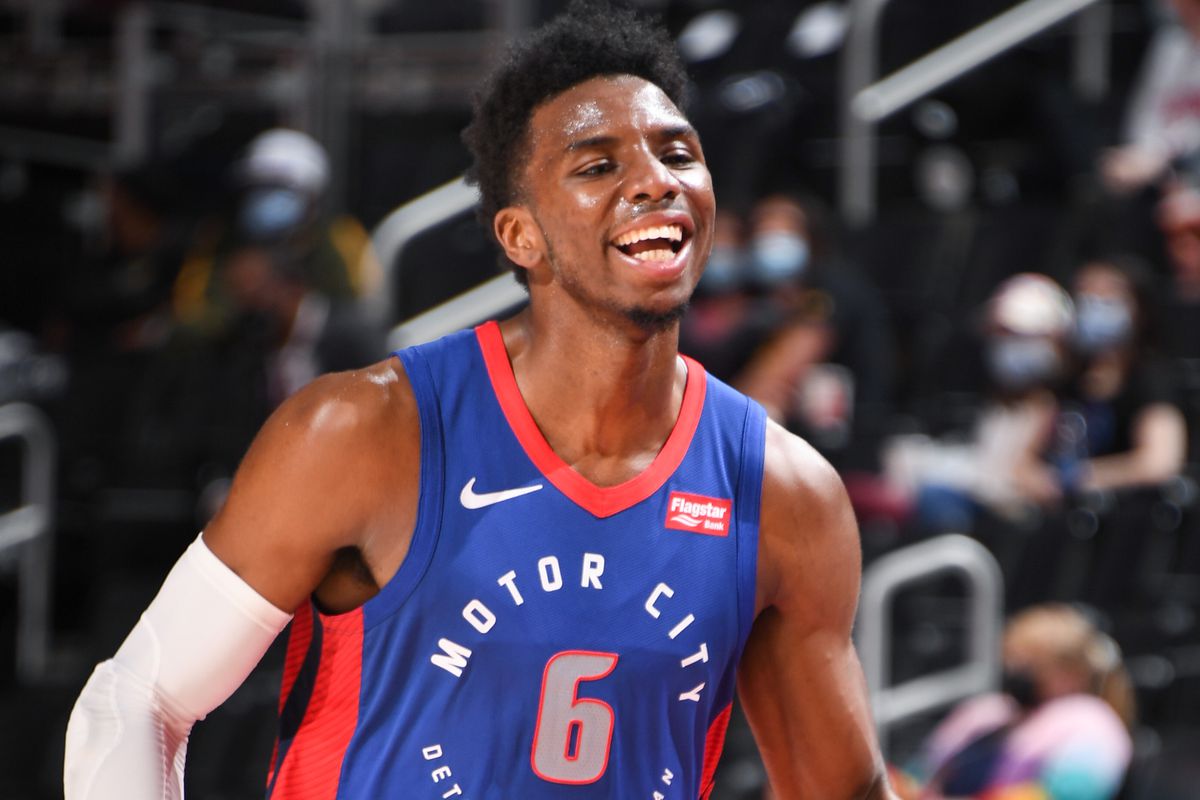
Hamidou Diallo (Detroit Pistons)

Age: 24
Position: Wing
Contract: $5.2M cap hit, UFA this summer (2023)
If individual, half-court shot creation is the most desired skill in the postseason, then versatility is next in line. Teams that are able to beat teams in a variety of ways with a variety of lineups are significantly more likely to experience postseason success. It’s why a player like Hamidou Diallo would be so valuable at the deadline.
Diallo’s game is reminiscent in a way of Bruce Brown: he’s a big in a guard’s body. Diallo is a terrific finisher inside, shooting 74% at the rim, which is an elite mark for a player of his size. 60% of Diallo’s shots come at the rim, indicating a game ripe for dominating inside the paint. Diallo’s skillset provides the ability for teams to unlock major mismatches; while he’s not heavily involved in these actions in Detroit, it’s easy to envision him thriving in a Bruce Brown-like role, dominating as a screener while operating in short-rolls, serving as a safety valve off traps, and attacking down to the rim off a pass. That’s Diallo’s ideal role and it’s fun to imagine the possibilities for him: could a team like the Brooklyn Nets trade for Diallo to fill Brown’s role? What about the Dallas Mavericks, who see their star player get trapped more than any team in the league? Diallo in Minnesota would allow the Timberwolves to run five out offense when Rudy Gobert is off the court while having an interior scoring presence like Diallo.
Diallo’s value comes from beyond just his interior scoring and playing larger than his size. Diallo is a terrific rebounder and defender as well, making his role quite clear on a postseason team. He’s still young and while he’s hitting UFA this summer, he probably won’t cost a ton to acquire. I doubt Detroit would shop him individually, but as an additional piece within a deal for Alec Burks or Bojan Bogdanovic? I think a smart team would try and add Diallo in if the Pistons want to milk out a first-round pick. He can be an impact postseason player and, in my opinion, could be unlocked into a breakout player in the right role.
Ideal Team Fits: Golden State Warriors, Minnesota Timberwolves, Brooklyn Nets
Zach Collins (San Antonio Spurs)

Age: 25
Position: Big
Contract: $7.4M cap hit, UFA in 2024 (2023 salary is fully non-guaranteed)
Jakob Poeltl gets all the attention out of prospective trade targets in San Antonio, but I think there’s a legitimate argument to be made that not only is Zach Collins a great alternative option, he might even be the superior target. That statement shouldn’t be misinterpreted as me saying “Collins is better than Poeltl”, but when considering factors such as acquisition cost, anticipated role, etc., Collins has a legitimate argument.
Poeltl garners a lot of attention for his rim protection but this season, his reputation has exceeded his performance. In fact, Collins has actually been the superior rim protector this season, as evident by the numbers below:
| dFG% <6 Ft. | dFG% <6 Ft. Diff | |
| Zach Collins | 55.30% | -8.50% |
| Jakob Poeltl | 59.80% | -4.80% |
Collins’ rim defense isn’t a fluke either; while Poeltl has regressed this year in what could be dismissed a bit as an “unlucky season” (although, that feels generous), Collins has been consistently stout inside. Collins was at 56.9% dFG within 6 ft. last season, good for a -6.5% differential. From a sole rim protector role, Collins might arguably be the better option. He is a more volatile defender than Poeltl; Collins commits 5.5 fouls per 36 minutes and isn’t a great rebounder, but on a playoff contender, he likely will only see a 15-20 minute stretch. His weaknesses won’t be as amplified, but his diversification of strengths, including good 3-PT shooting (38.5% on catch and shoot 3s) and underrated passing makes him an invaluable target.
Lastly, there’s one additional wrinkle which I think makes Collins exceptionally valuable: his non-guaranteed salary for next season. The recent trends we’ve seen in superstar deals is for the team trading their superstar prefers a treasure trove of picks over young prospects/players. Take the Spurs/Hawks Dejounte Murray trade as an example: the Hawks sent out Danilo Gallinari’s contract and three picks for Murray. Collins’ deal being non-guaranteed makes him an easy salary match in a 1:1 swap, or as a “free square” in a larger deal as a team won’t be on the hook for Collins’ deal. That makes him an extremely valuable trade chip this summer regardless of how a team views his talent; a smart front office will take advantage of that. It’s why Collins is so high on our list.
Ideal Team Fits: Brooklyn Nets, Denver Nuggets, Dallas Mavericks
P.J. Washington (Charlotte Hornets)

Age: 24
Position: Forward
Contract: $5.8M cap hit, RFA this summer (2023)
P.J. Washington is a little bit of a different type than the majority of guys seen on the list: he’s a former lottery pick who’s still on his first NBA contract. There’s, in theory, some untapped potential with Washington’s game and, similar to the Los Angeles Lakers’ trade with Rui Hachimura, he could use a three month audition with a competitive team to see if he can slide into a different role and become an impactful, winning player. He’s a guy who could use a change of scenery, but I think his game and versatility makes him a prime trade target.
Washington has an intriguing, diverse skillset: he’s averaging 17.0 points per 36 minutes, a pretty solid number, despite it coming off below average efficiency. A large part of his inefficiency comes from his shot selection: according to Cleaning The Glass, 75% of Washington’s shot attempts come from mid-range or the 3-PT line and he’s not a particularly great shooter. In an ideal lineup, Washington would likely be a floor spacer, but in a situation where he plays alongside a separate floor spacing big, it’s intriguing to envision a world where Washington plays around the basket more, operating in short rolls, out of the dunker spot, and more as a cutter. If the Denver Nuggets are looking for additional frontcourt depth, it’s easy to envision Washington fitting in really well behind Aaron Gordon and Nikola Jokic.
While I think Washington needs some role refinement to become a contributing player on a winning team, all the talent is there. He’s only 6’7, but he’s a solid rim protector who is good at generating blocks/steals. For his position, he’s a solid, yet unspectacular, 3-PT shooter, good enough to be at least a threat from beyond the arc. If Washington were to become a better rebounder, there’s some upside for him to operate as a small ball center, but he struggled in that role with Charlotte. Betting on a 24-year old, versatile forward who can score, defend, and shoot a bit is a smart move, especially when it’ll likely cost less than a first-round pick to acquire him.
Ideal Team Fits: Denver Nuggets, Cleveland Cavaliers, Milwaukee Bucks
Will Barton (Washington Wizards)

Age: 32
Position: Wing
Contract: $14.4M cap hit, UFA this summer (2023)
Will Barton is the first in an incoming long line of players who have a similar persona: a veteran player with an expiring contract. These are always players who get moved at the deadline, but in the case of a lot of them, I haven’t heard heavy trade buzz. I don’t think Will Barton is at the top of any team’s deadline wish list. But, in terms of helping a team? He’s still got plenty of juice left and, in turn, can be an impactful playoff performer.
Overall, Barton has really struggled this year in Washington: his efficiency has plummeted, in large part because his shooting around the rim and on what Cleaning The Glass designates as “short rim” attempts have seen a major dip in accuracy. Perhaps it’s a sign of Barton’s age beginning to catch up to him, but a 12% decline in short rim FG%? That’s too much of a drop to write off in one season from getting older. Even with his issues inside this year, there are still plenty of ways he’s able to contribute.
To start, Barton is one of the more underrated 3-PT shooters in the NBA. Per Cleaning The Glass, Barton has ranked in the 70th percentile or better for his position on corner 3-PT% in the past four seasons and five of the last six. The past few seasons illustrate an elite, standstill shooter, and not just from the corner either. See below for his past four years (inclusive of this season) for his catch and shoot 3-PT numbers:
- 2022-23 Season: 42.20%
- 2021-22 Season: 38.20%
- 2020-21 Season: 39.10%
- 2019-20 Season: 40.30%
Barton isn’t mentioned in the game’s better shooters, but he should be. At the bare minimum, he’ll be able to contribute as a 3-PT threat. But, at his best, Barton can be so much more. Over his final four seasons in Denver, Barton averaged more than six drives per game (a solid mark for a wing and one comparable to Jerami Grant, Tobias Harris, and Harrison Barnes) and over the past five seasons, he’s been in the 75th percentile or better for his position in terms of shot share which comes via unassisted field goals (via Cleaning The Glass). Barton’s individual shot creation is impressive and further evident by seeing the majority of his shot attempts come off 2+ dribbles this season (58.1%) and a near majority last season alongside a generational star in Nikola Jokic (47.1%). Simply put, Barton isn’t just a standstill guy. Rather, he’s a terrific catch and shoot option, but he’s also a capable individual shot creator who can attack an overzealous closeout or, in certain situations, even work an isolation setting to his advantage. Those players don’t grow on trees and in the postseason, it’s evident to see where Barton could provide a spark over a 10-15 minute stretch.
The cons to Barton’s game are fairly obvious. He’s a really poor defender; he’s been one of the worst defenders in isolation settings over the past three seasons and when the postseason turns to mismatch hunting, having a defensive liability on the court such as Barton puts the entire team defense into a bind. But Barton won’t be expected to play 25+ minutes, making the defensive risk, in my opinion, significantly more minimal than it was last season when Denver relied upon Barton in a starting role. In the right system with a solid defensive core, Barton likely won’t be as much of a weakness. Barton is also a bit turnover-prone, but once again, as a role player rather than a starter, Barton will likely be able to mold his game slightly differently. There aren’t many better catch and shoot “plus” guys on the market and if it doesn’t work, Barton is only a short-term rental. To be honest, I think Barton can help a team win a playoff game or two this season and would make for a very smart trade deadline acquisition.
Ideal Team Fits: Miami Heat, New York Knicks, Chicago Bulls, Boston Celtics
Josh Richardson (San Antonio Spurs)

Age: 29
Position: Wing
Contract: $12.2M cap hit, UFA this summer (2023)
Yet another player who fits in as a wing on an expiring contract, Josh Richardson makes for yet another prime trade deadline target. While not as dynamic of an offensive player as Will Barton, Richardson is much more of a two-way threat, functioning as a quality defender, particularly amongst smaller players, while providing reliable 3-PT shooting and occasional shot creation skill. Richardson’s stock has seemed to really lost its luster around the league after being included in the Jimmy Butler sign-and-trade four summers ago, but he’s a solid wing who can contribute in a bench role for a playoff team.
Richardson is far from a star, but he does possess arguably the most valuable skill amongst role players: versatility. Richardson has good size (6’6) and can guard all wings and guards; he’s not a lockdown defender, but he’s not a poor one either. Richardson has been above league average in isolation settings this year (allowing 0.86 PPP and a 23.2% turnover rate). This is a volatile statistic, but it does illustrate that Richardson is far from a liability. He’ll likely never be tasked with guarding an opposing team’s #1 option, but he’s solid enough to handle his own on switches and not be targeted on mismatches, which is critical for a role player who isn’t an offensive centerpiece.
Offensively, Richardson has some diversity in his attack. He’s around league average on catch and shoot threes (36.6%), but a good chunk of his made field goals are unassisted (36.8% per Cleaning The Glass). Richardson is an underrated passer/playmaker for others as well and in a similar vein to Will Barton, he’s more than just a standstill shooter offensively, although he’s not as good as Barton in nearly every offensive category. Still, Richardson can be a spot up guy, or he can attack a hard closeout, run a pick-and-roll, or create off the dribble in a pinch. While pure 3-and-D guys still have a role in the NBA, they’re significantly easier to scheme out in the postseason; a guy like Richardson, who offers just enough creation/threat when forced to put the ball on the deck, are arguably more valuable than the traditional 3-and-D.
Ideal Team Fits: Milwaukee Bucks, Sacramento Kings, Los Angeles Lakers
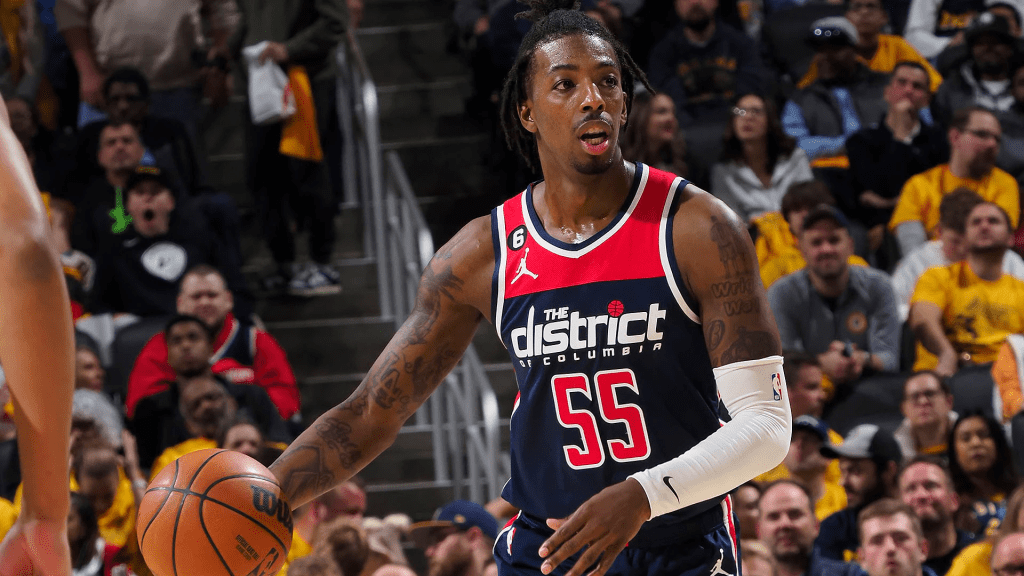
Delon Wright (Washington Wizards)
Age: 30
Position: Guard
Contract: $7.8M cap hit, UFA 2024 (fully guaranteed $8.2M next season)
Delon Wright is an intriguing player; another former Maverick who never filled the “secondary, two-way guard” role that Dallas has forever been searching for alongside Luka Doncic, Wright’s stock took a hit after his lone, disappointing season in Dallas. Wright never blossomed into the complete player we saw glimpses of during his second half stretch with the Memphis Grizzlies way back in 2019, but he does a few things quite well. He’s an extremely disruptive off ball defender who can hold his own on-ball as well, he’s a solid 3-PT shooter, and he has some passing chops.
Wright isn’t a particularly flashy player and he’s rarely someone you want taking on a primary offensive role. Wright’s offensive passivity at times can hold back his game, but in the right postseason situation, he has value as a spot-up shooter. Wright is only shooting 30% from deep this season, but he was at 37%+ over his previous three seasons, indicating to me he’s likely to get hot in the second half. If Wright can positively regress, which would involve him hitting 40%+ (to inch closer to 37% for the year), he’d be a huge weapon. Over 54% of Wright’s made field goals are of the unassisted variety (per Cleaning The Glass) and 53.10% come off two dribbles. Wright can function solely as a catch and shoot guy, I role I think he’d likely be reduced to on a postseason roster, but his ability to do something with his handle is intriguing.
Defensively, this is where Wright adds value. He has a ridiculous 4.40% steal rate and he’s finished significantly above his positional average (per Cleaning The Glass) for his entire career regarding steals and blocks. Wright is a defensive playmaker; he can disrupt offense with his rotations and instincts, anticipate passes, and use his length to jump seemingly open lanes. With how often teams trap and double team superstars in the postseason, it’s easy to envision a role in which Wright can either operate as a trapper, or freely roam the back end as a “free safety” to intercept passes. Wright is that good at wreaking havoc defensively and a role exists for him. Take a look at what Frank Ntilikina was able to do with the Dallas Mavericks last year; Ntilikina never impressed with gaudy scoring numbers, but Dallas likely doesn’t upset Phoenix without his defense. Wright is a different type of defender than Ntilikina, but that’s the type of situational role he can thrive in.
Wright’s contract (fully guaranteed for 2023-24) is certainly restrictive; he’s overpaid and as a result, should likely come at a bargain bin price. If a team can simply swap a similar salary and toss in a protected second round pick, it turns into a low-risk gamble. With so many postseason teams already over the cap to begin with, acquiring Wright isn’t as crippling to a cap sheet as it’d be for a team planning to have summer cap space.
Ideal Team Fits: Sacramento Kings, Phoenix Suns
Mason Plumlee (Charlotte Hornets)

Age: 32
Position: Big
Contract: $8.5M cap hit, UFA this summer (2023)
It seems almost fitting that Mason Plumlee is included on our list of under-the-radar trade targets, primarily because I view Mason Plumlee as one of the more underrated players in the NBA. Plumlee was fantastic as the backup to Nikola Jokic for much of his career and while his game isn’t resemblant of the prototypical modern five, he’s a unique offensive talent who can act as a central hub for a team’s half court sets. Plumlee is almost certainly going to be wearing a different jersey in a few weeks; the Hornets have promising big Mark Williams deserving of minutes, Plumlee is on an expiring contract, and the Hornets aren’t going anywhere this season.
Plumlee is one of the better offensive centers in the NBA and he does it in a unique fashion. Similar to how effective Dwight Powell is in Dallas, Plumlee is similar in that aspect as he’s not a center you throw the ball to and expect him to score 1:1, but he can thrive in different ways. Plumlee is a terrific passer and can thrive in short rolls or at the top of the key. Plumlee has been in the 60th percentile or better as a roller in four of his past five seasons and in Denver (a significantly better situation than Detroit or Charlotte) he was 80%+. Having an elite rolling big on the roster who happens to be such a good passer that he can create plays for guys at the top of the key is a valuable player.
We’ve harped a lot on Jakob Poeltl here and for good reason. He’s clearly the most available big on the market (outside of perhaps only John Collins) and is likely to demand a hefty return. Ironically, however, Plumlee and Poeltl are rather similar players as evidenced below:
| Mason Plumlee | Jakob Poeltl | |
| Rim FG% (Cleaning The Glass) | 73% | 74% |
| Block % | 1.3% | 2.3% |
| Steal % | 1.0% | 1.3% |
| Defensive Rebounding % | 22.3% | 23.3% |
| dFG% <6 Ft. | 64.30% | 59.80% |
Poeltl is clearly the better rim protector, but other than that? Not far off; if a team is in need of a quality big while having adequate rim protection, it wouldn’t hurt to consider Plumlee rather than more of a luxury play like Poeltl, especially considering Poeltl has been below average defending at the rim this season anyways. Poeltl is the better overall player, but in terms of a three-month rental and assuming acquisition cost, I think some teams should certainly feel more inclined to target Plumlee compared to Poeltl.
Ideal Team Fits: Denver Nuggets, Boston Celtics, Brooklyn Nets
Kelly Olynyk (Utah Jazz)

Age: 31
Position: Big
Contract: $12.8M cap hit, UFA in 2024 ($3M partially guaranteed for 2023)
The final name on our list: Kelly Olynyk. Olynyk has become a bit of a forgotten guy in the NBA after some injury-riddled campaigns with poor teams in small markets, but we’ve seen in the past that Olynyk can be a valuable player. His main value add comes from his perimeter shooting at his 7’0 size, allowing teams to play five out without sacrificing height. Teams have shown the willingness to play small in the postseason which may limit Olynyk’s value a bit, but he can score and shoot. For a guy averaging 15.3 points and 4.1 assists per 36 minutes this season, I think it’s fair to acknowledge that Olynyk can help some teams if Utah makes him available.
Olynyk’s 3-PT game is very good: Cleaning The Glass has rated him in the 80th percentile or better for his position three times in the past five seasons. For a big, he’s an elite shooter. Olynyk is at 41.6% on catch and shoot threes this season, a number that’s elite regardless of position and size. He’s not a guy you want attacking closeouts, but his shooting gravity will lead to more space for guards to drive. Teams are always looking to fortify their perimeter shooting and Olynyk can easily slot into that role, a guy playing 10-15 minute spurts when an offensive dry spell is hitting. His 3-PT shooting could help a team win a postseason game.
Outside of shooting, Olynyk isn’t extremely positive in other areas, but he does things well. He’s not your prototypical big on the defensive end; he won’t alter shots around the rim in a meaningful way, he isn’t a center, and he’s not a great rebounder. However, he has active hands and can create turnovers. In a small role, Olynyk won’t be a liability and can be a significant plus with his shooting. It should be noted that while counting stats aren’t always the best, 15+ points per 36 minutes is a solid mark. That’s quality offensive production from a player who likely will come at a relatively cheap cost.
One other thing to point out with Olynyk in a similar vein to Zach Collins from earlier: Olynyk only has $3M of his salary next season guaranteed. That makes him an enticing piece to include in a trade for a player of either equal (~$12M salary) or as a larger piece in a salary matching move. It’s once again a consideration a smart front office should weigh if considering a trade for Olynyk.
Ideal Team Fits: Miami Heat, New York Knicks, Memphis Grizzlies
 The Chirp