
It has been a rough stretch for the Dallas Mavericks. Since getting eliminated from the postseason in a Game 7 against the Los Angeles Clippers, they were the subject of a feature story in The Athletic by Tim Cato and Sam Amick, which highlighted the dysfunction within their front office and the simmering tension between Luka Doncic and then head coach Rick Carlisle. Right on cue, Donnie Nelson, the team’s President of Basketball Operations and General Manager, was fired (it was termed a mutual parting of ways, but Cato reported he was fired) and a few days later, Rick Carlisle resigned. I detailed the Mavericks’ dysfunction here, but the past few weeks have been a whirlwind, all leading up to the flurry of reports dropped on Thursday.
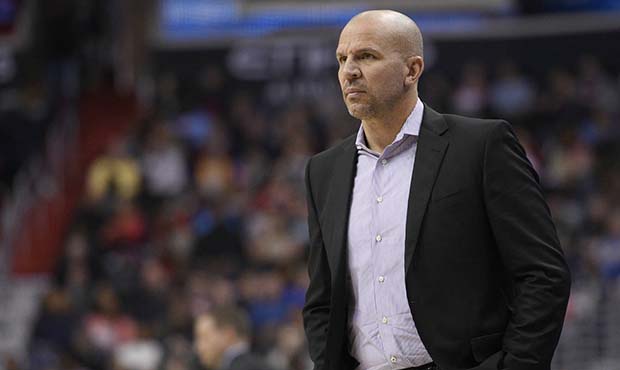
It appears the Mavericks have settled on their new direction. Reports from Marc Stein of the New York Times, and Adrian Wojnarowski and Tim MacMahon of ESPN, indicate that Michael Finley, Dallas’ Vice President of Basketball Operations, will stay with the team (it still seems a bit unsure whether he’ll be promoted or not), and that the Mavericks are “progressing on a deal with Nike’s Nico Harrison (a Nike executive) to lead basketball operations” (direct quote from Woj’s tweet). The Mavericks seem locked in on Jason Kidd, a former Maverick who played two stints with the team including being a member on the 2011 title roster, to be the new head coach.
These may be relatively new faces in Dallas’ revamped circle of trust, but don’t be fooled: these hires prove nothing has changed. The Dallas Mavericks have systemically failed at building a championship-caliber roster ever since their 2011 championship, which is a major problem considering they employed Dirk Nowitzki and/or Luka Doncic for all of those seasons. As Mavericks’ fans, we’re used to failure; we’ve withstood the decision to break up the title team, we’ve withstood Deron Williams choosing Brooklyn, while mentioning how Mark Cuban not being at his free agency meeting had an impact on that choice. We’ve withstood the incessant free agency failures and hoarding cap space to whiff and whiff again, we’ve withstood Rajon Rondo and Lamar Odom, we’ve withstood DeAndre Jordan reneging on his commitment and the entire NBA Twitter community mocking the Mavericks. The list goes on, almost to embarrassing lengths. Change was necessary, but the matter in which the change occurred was undesirable.
When Mark Cuban hired the search firm Sportsology to aid their search for a new President of Basketball Operations/General Manager, I was quite excited. Mike Forde’s firm has done terrific work, placing executives in multiple landing spots with a track record of success. While Donnie Nelson is forever a Mavericks’ legend, I was intrigued by bringing in an outside voice, preferably someone who would bring a new philosophy to team building. The Mavericks have run three strategies since the 2011 title break-up, all of them failing. Strategy #1 was star chasing and cap space flexibility. Strategy #2 was overpaying restricted free agents. Strategy #3 was seeking value contracts. Despite Luka Doncic being the best player drafted in the 2018 class, it’s two other top-5 picks, Deandre Ayton and Trae Young, who are playing in the Conference Finals. Perhaps that level of success that two other third-year pros have seen with their respective teams is the biggest indictment of Dallas’ systemic failure to properly build a roster.
The Mavericks did bring in an outside voice, but seemingly, one whose reputation and strong network of relationships will help more in a recruiting capacity rather than a team-building one. For the record, I love the hire of Nico Harrison; nobody has said a bad thing about him and by all accounts, he’s incredibly bright, personable, and engaged. But, the hiring of a Nike executive does indicate one thing to me: Mark Cuban was not interested in ceding substantial, personnel decision-making power to anyone else. Within the past few weeks, the decision-making power Cuban has yielded has come to further light, illustrating just how active Cuban is in roster decisions. Harrison is a great hire, but is it realistic to expect an individual with zero experience running a front office to magically be signing off on major decisions? Harrison’s level of expertise comes with his network, which, in my opinion, seems to be a primary asset to convince free agents to come to Dallas. Hopefully Harrison will aid in the identification of talent, something he could excel at given his role at Nike (which involved identifying talent for Nike to sign), but odds are, Cuban will once again be the ultimate decision-maker. Michael Finley deserves an elevated role in the front office, but the lack of experienced, outside hires being brought in proves one thing: this is still Mark Cuban’s show.
Mark Cuban cares a lot about his players and for that, he’s an admirable owner. However, his personnel decisions are highly questionable, at best. Since the 2011 championship, he has:
- Publicly indicated his support for blowing up the championship roster without giving the group a chance to run it back.
- Favored trading down in the 2013 NBA Draft to save cap space for Dwight Howard, instead of listening to Donnie Nelson and drafting Giannis Antetokounmpo.
- Been unable to field a roster capable of advancing past the first round in a decade.
Mark Cuban won’t fire himself, but if a general manager boasted that track record anywhere in the league, they’d be out of a job. None of these front office changes indicate anything will be drastically different, but rather, will only further consolidate more power with Cuban himself. There’s already proof that is happening, as we got no reports that Sportsology either referred candidates to the Mavericks and/or the Mavericks interviewed any of them. Not only that, but a day after the report that Cuban hired Sportsology came out, he was meeting with Dirk Nowitzki and Michael Finley to discuss the steps forward, where it was reported Jason Kidd’s name was dropped. That certainly doesn’t seem like a cohesive, well-functioning unit.
With all the reporting dropped on Thursday, here’s my guess on how this all went down. I believe in the meeting between Cuban, Nowitzki, and Finley, they did discuss future steps forward and mentioned Jason Kidd’s name as a head coaching candidate. Reports from Brad Townsend of the Dallas Morning News and MacMahon indicated that Nowitzki strongly supported hiring Kidd, his teammate on the 2011 championship roster. Obviously, I’m not an insider source, but I personally believe Cuban was sold on bringing Kidd in after that meeting. One, getting Dirk’s stamp of approval likely persuaded him. But, two, Kidd has a strong reputation around the league for his relationships with players and has a nostalgia factor in Dallas due to his championship ring. Despite Dallas saying they were going to hire a front office executive first, all of the reports and their actions indicate the opposite. It seemed Dallas wanted Kidd and then moved to find a front office executive who would 1) work in tandem with Nowitzki, Cuban, and Finley in building the roster (and seemingly have good league-wide relationships) and 2) would support the hiring of Jason Kidd. Jason Kidd and Nico Harrison reportedly know each other well, further adding to this belief. Ultimately, it feels like those five individuals combined will make personnel decisions while Kidd functions as the head coach. The whole process just feels weird and disjointed. Maybe that’s just me, but it does not inspire more confidence in Dallas’ ability to properly build a championship-caliber roster around Luka Doncic.
Despite my beliefs regarding the disjointed hiring process and Cuban’s unwillingness to cede meaningful control to someone else, I could get behind Dallas’ front office moves. Michael Finley is well-liked by players and has a good basketball mind. Nico Harrison’s relationships will surely come in handy, and hearing how sought after he was (according to Woj) and all the good things made me really excited about his impending hire. Thinking Cuban would give up the personnel decision power was always a pipe dream, so why not add a well-liked and highly respected guy with an elite network of relationships? Agents working in front offices has become the wave in the NBA (Rob Pelinka, Leon Rose) as relationships are everything. The addition of Harrison, along with Kidd’s likely hire, surely feels like Dallas is angling themselves to be an appealing place to play for prospective free agent stars.
However, there are still ample problems with these decisions. The biggest being Dallas’ philosophy regarding team building will not change with these moves. Firing a lead front office executive, whose tenure has spanned two decades, and adding in only one outside hire (who has no front office experience) doesn’t transform the organization into new, innovative thinking. Dallas’ philosophy of star hunting, building through free agency, and undervaluing the draft will remain the same, despite ten years of failure to prove it may not be a wise strategy. There’s not much you can hope for as a fan on this, primarily because the man in charge cannot be fired. To be frank, Mark Cuban’s track record gives me zero confidence in him making the proper decisions to build a championship roster. Adding in multiple outside hires who Cuban would cede power to would give me a much greater vote of confidence, even if that was always a pie-in-the-sky dream.
Despite my meddling views on the limited front office shakeup, by far the most polarizing move is Dallas’ decision to focus on Jason Kidd as their next head coach. Reports are that the Mavericks have been negotiating with Kidd, making this seem inevitable, unless Kidd wanted to replicate his 2012 move and renege on Dallas to go elsewhere. I will go on the record and take a strong stance: hiring Jason Kidd is the worst possible decision the Mavericks could make. For me, it’s the breaking point; after all the free agency blunders, failed rosters, mismanagement of relationships, and more, this is the straw that breaks the camel’s back for me. Nothing in Jason Kidd’s past indicates he’s capable of being a good NBA coach and with his long list of issues off the court, including a domestic violence charge in the early 2000s, a DWI in 2013, failed power grabs in both Brooklyn and Milwaukee, and beratement of assistant coaches, I should be floored that Dallas opted for Kidd. However, Cuban’s track record of basketball decisions doesn’t make this a terrible surprise. As soon as Marc Stein reported Kidd’s name came up in that initial meeting, it was time to brace yourself for it.
To speculate, I’m guessing the Mavericks hired Kidd for a few reasons. As listed above, Kidd’s relationships with players, namely stars (Giannis Antetokounmpo, Damian Lillard, and LeBron James have all vouched for him) was surely an enticing draw. Combined with the hire of Nico Harrison, it’s easy to read between the lines of what Dallas’ plans are. Second, Kidd’s connection to the 2011 championship seems to be another plus. However, I’d also add that I do believe Mark and his circle of trust think Kidd’s basketball mind meshes well with that of Luka Doncic and, that together, they could do special things. Personally, I contest to all of that. Dallas’ star-hunting gambit has yet to pay off and, in my history of monitoring free agency moves, I’ve yet to see a player go to a specific team because of the coach. They go because of the roster or the location and in Dallas’ case, they frequently fail to build an appealing roster. Kidd doesn’t change that and his track record on making personnel decisions is extremely poor.
There is a little nostalgia piece to Kidd returning, but the Mavericks’ insistence of remembering the 2011 championship is tiresome. It’s reminiscent of Yankees’ fans using the “27 rings” argument whenever someone mentions their current roster isn’t good. Dallas cannot keep looking for validation in their methods by using the 2011 roster as an example. To me, this move feels a lot like looking backwards and hoping to replicate some of the success of the past, rather than moving forwards. Kidd’s performance as a head coach, also, has been objectively bad. Kidd’s career record is 183-190, good for a 49.1% winning percentage. The best a Kidd coached-team has finished is 44-38 in his lone season in Brooklyn, with a roster with the league-high payroll. Kidd was gone after that year due to a failed power grab, but the entire season was filled with turbulence, including his beratement of lead assistant Lawrence Frank which involved Frank being re-assigned. Kidd then went to Milwaukee, where he flamed out midway through his fourth season after experiencing mild success. Despite a very similar roster, Mike Budenholzer drastically improved the team’s performance the following season. Kidd has yet to prove he can win in the NBA on the sidelines and controversy has followed him everywhere. Even from a tactical standpoint, this move screams mediocrity.
Kidd’s basketball resume as a coach is uninspiring, but his off-court track record is particularly disturbing. Jason Kidd was arrested in 2001 for domestic abuse after he hit his ex-wife. The Mavericks are not even four years removed from a disturbing report uncovering the sexual harassment, workplace harassment, and toxic culture that was enabled within their organization. Dallas’ hiring of Kidd is incredibly tone deaf, to say the least. The list is long with Jason Kidd, and ESPN compiled an entire list which could be found here. To me, the simple point is this: Dallas’ decision to overlook Kidd’s incredibly checkered past is frankly, beyond disappointing. But, even if his past was crystal clear, he’s done nothing during his time as a coach to inspire confidence that he will elevate the Dallas Mavericks to a higher level.
Jason Kidd has nothing on his resume that proves he’s well-qualified to deserve this job, but he has plenty on his resume to illustrate he’s not qualified to serve in this position. This is all especially frustrating when, Rick Carlisle’s former lead assistant, Jamahl Mosley, was a home run choice gifted to the Mavericks. Mosley is incredibly well respected and highly thought of around the league, is beloved by Luka Doncic, has strong relationships within the organization, and has learned from Carlisle over the past seven years. Carlisle’s personality and attitude certainly had worn out its welcome in Dallas, but Mosley did not share those traits. However, he could share similar X’s and O’s. Luka Doncic offered a ringing endorsement of Mosley earlier this season after he coached a game in which Carlisle was out due to a false positive COVID test:
It seemed the obvious and easy choice for this position was Jamahl Mosley, yet, the Mavericks opted for a coach who has worn out his welcome everywhere he’s been, who has an extremely troubling off-court record, and has underachieved in his two coaching spots. The fact that this decision felt so easy is what makes it so frustrating. I’m not one to buy into the media circus of Luka Doncic’s future with the Dallas Mavericks, but I do fear that, in 3-4 years, we’ll look back on these decisions as the reasons why Luka is either staying, or asking for a trade. If I was in charge, I absolutely would have hired Jamahl Mosley, aimed to bring an experienced coach as the lead assistant (Terry Stotts or Steve Clifford), and opted for more external front office hires, like Calvin Booth from the Denver Nuggets in conjunction with Nico Harrison. The decisions Dallas made certainly makes me a bit more nervous regarding Luka’s future with the Mavericks.
Nothing the Dallas Mavericks have done in the past ten years gives me any confidence they have what it takes to build a roster and organization worthy of keeping Luka Doncic around for his whole career. It’s a sad statement, but one that rings true. Ever since acquiring Doncic on draft night in 2018, it feels like the Mavericks have messed up nearly every consequential opportunity they’ve had to build a championship roster. Their free agency whiff on DeAndre Jordan in 2018 started it, followed by trading Harrison Barnes (an all-time good guy who would be a perfect fit on this roster) for Justin Jackson and Zach Randolph, neither of whom are on the Mavericks. The Kristaps Porzingis deal was a worthy gambit that I would still deem a success, but Porzingis’ injury issues and diminished mobility questions if he can be a second star and his lofty contract makes him an unappealing asset to trade. Tim Hardaway Jr. was a terrific acquisition, but how else has Dallas meaningfully upgraded this roster? In an odd, particularly disappointing note, there’s a large portion of holdovers from Luka’s rookie year currently still on the roster, despite the fact the Mavericks went 33-49 that year. The newcomers they’ve brought in have been a mixed bag, with many no longer around. Dallas’ failures are particularly glaring every passing day, as previously mentioned, with the success of the Phoenix Suns and Atlanta Hawks. Luka Doncic is a top-5 player in the world on a rookie contract, and with all the talent in the league, you’re telling me the Mavericks couldn’t compile enough of it to go on a playoff run?
This is the most consequential summer the Dallas Mavericks will have in a long time and truthfully, it’s only gotten more and more stressful as the days go on. The decision-making remains highly questionable at the top of the organization, and it appears no changes of strategy are entering any time soon. Dallas seems destined to run down the path of star acquisition via free agency, a strategy that has failed over and over again, while leading to mediocre rosters filled with overachieving players. However, with Rick Carlisle gone, how likely are players to overachieve in Dallas again? Is the goal really to build rosters with league average players and hope they overperform their contracts, something the Mavericks have relied upon as of late? Things need to change in Dallas; there needs to be an overhaul of the systemic failures that have led to a ticking clock. The problem is, nothing the Mavericks have done this summer indicate that’s going to happen. Don’t be fooled by the changing names, titles, and departures of key, franchise staples: nothing has really changed in Dallas.
 The Chirp