
The 2021 NFL Draft is officially wrapped up and like all years, it’s time for some analysis. We saw quite a bit of activity throughout the three days in Cleveland, but perhaps the most consequential piece of news we received had nothing to do with the draft prospects at all. Rather, it was the incessant reports that Aaron Rodgers has no intention on returning to the Green Bay Packers. There have been some follow-up reports that Rodgers would return only if General Manager Brian Gutekunst is fired, but with the way things have trended in Green Bay, it seems like it will be quite a surprise if we see Rodgers wear the green and yellow again. Rodgers has hosted Jeopardy over the off-season and seems to enjoy it; what a story it would be if Rodgers retired to be the full-time Jeopardy host.
Outside of the Aaron Rodgers news, it was a pretty monumental weekend for the NFL. We had plenty of notable moves, surprising picks, and everything in between. Come with us as we break down what we learned from this past weekend:
Why Don’t Teams Draft Sliding Quarterbacks?
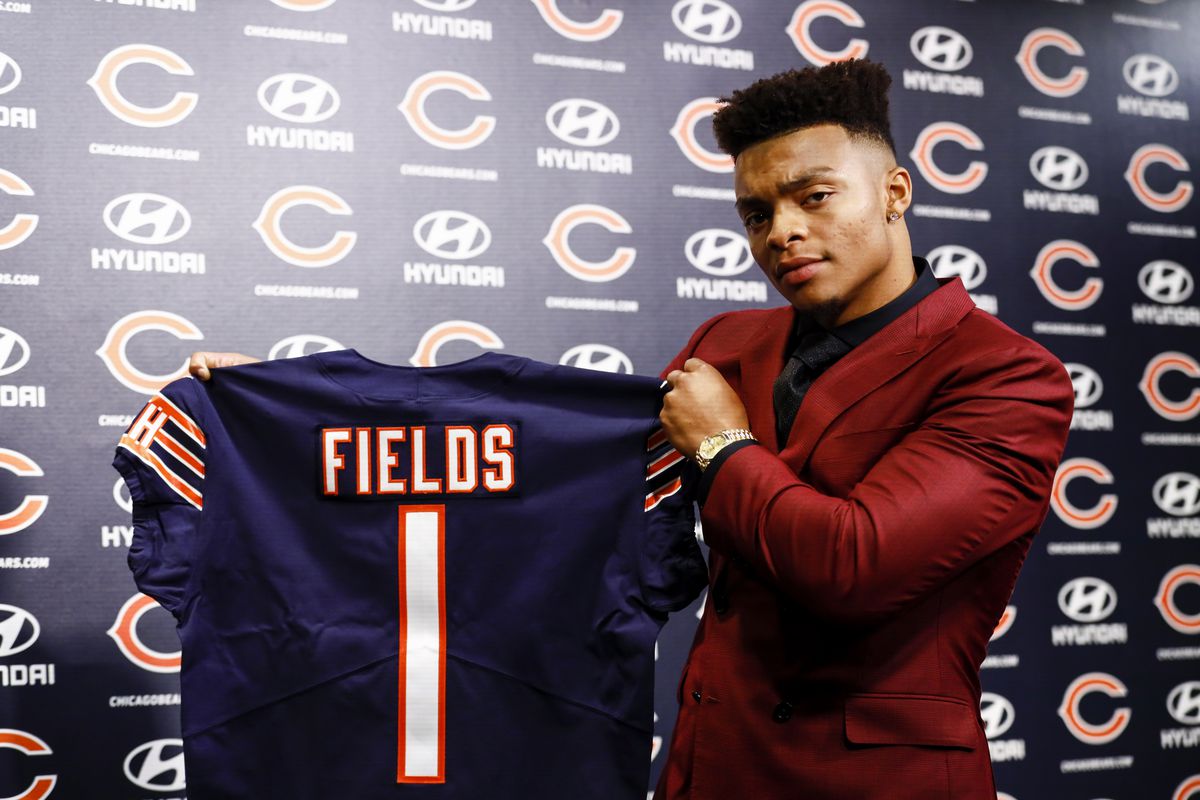
This is a question I found myself asking repeatedly during the NFL Draft on Thursday and four days later, I am still asking it. Even if quarterback is not a team’s biggest need, there does have to be some merit to selecting a player at a premium position who is sliding down the board. While it seems like the NFL wasn’t as high on Justin Fields as the media world was, I still think many would be a bit surprised if Fields wasn’t a successful NFL starter. Even if you have the quarterback position secured, why wouldn’t you draft Fields? Isn’t that good asset management? Or, if you were intent on not selecting a quarterback, why wouldn’t you aggressively pursue a trade down to a team who was in need of a quarterback? To put it simply, I was left scratching my head at three teams in particular: the Carolina Panthers, Denver Broncos, and Dallas Cowboys.
Before I dive into each team, we need to acknowledge the value quarterbacks possess on the market. Yes, I am supporting what seems to be a radical idea, that even if you don’t need a quarterback, if one is sliding, you should draft him anyways just because the value a quarterback could bring back in a trade seemingly exceeds the value the player you would draft can provide. Take a very recent case study for an example: Sam Darnold. Darnold got a brutal starter pack to begin his career: he had Adam Gase as his head coach, a mediocre cast of skill players, and a poor offensive line. Even when Darnold was going through the draft process himself, there were plenty of doubters because of his turnover tendencies at USC. However, despite all the warning flags we’ve gotten that Darnold may not be that good, the New York Jets got a 6th round pick this year and a 2022 2nd round pick and 2022 4th round pick. Look, I know it’s unfair to come to a final conclusion surrounding Darnold’s career after starting with the Jets, but during his three seasons, Darnold is 13-25 as a starter and has 45 TDs compared to 54 turnovers. Despite that, he still landed the Jets a Day 2 pick.
If you’ve looked at past trades for quarterbacks too, the trend holds: even if the quarterback is unproven or has proven to be not very good, teams are willing to trade a premium. Go back to when New England traded Jimmy Garoppolo a few years ago. Garoppolo was impressive when filling in for Tom Brady during his “Deflategate” suspension, but he only started two games, won both by one possession, and only threw 59 total passes. Despite this, the Patriots were able to land a second round pick for Jimmy G. Carson Wentz, coming off a horrific season, got the Eagles a potential first round pick. Nick Foles, with a bloated contract and rough track record outside of Philadelphia, got the Jaguars a 4th round pick. And, Matthew Stafford, who is an elite quarterback, gave the Lions two first round picks, a third round pick, and Jared Goff, who I’d argue is better than Sam Darnold.
Teams are willing to mortgage the farm to acquire what they deem a starting quarterback, and for a player of Justin Fields’ potential, I struggle to see the added value in passing up on him (or passing up on a trade) to land a player at less of a premium position. Here’s a breakdown of the three teams I alluded to earlier:
Carolina Panthers
Despite the Panthers acquiring Sam Darnold in the weeks prior to the NFL Draft, it still seemed like they were in the hunt for a quarterback. As mentioned, it’s tough to fairly judge Darnold, but it’s also impossible to feel very comfortable in him as the long-term option in Carolina. Justin Fields, who the Panthers were heavily connected to, was sitting at #8. I’d argue Fields is likely better than Darnold right now and Darnold’s fifth-year option is a difficult needle to thread prior to the season. Yet, Carolina passed on Fields, opted not to trade down, and selected South Carolina cornerback Jaycee Horn instead, a year after the Panthers drafted defensive players with every single pick.
Now, I do really like Jaycee Horn as a prospect; he’s a physical, tenacious corner who has the attitude to set the tone for a defense. However, the value Horn will provide is presumably significantly less than what Justin Fields could have provided. Even if the Panthers are relatively sold on Sam Darnold, the worst case scenario by drafting Fields would have been just to trade him next year. Call me crazy, but plenty of teams will be looking for a quarterback and next year is thought of as a weak quarterback class. I felt like the Panthers passed on superior value and as history tells us, teams are willing to trade more than expected for a quarterback.
Denver Broncos
For as much as I didn’t like Carolina’s decision at #8, I really didn’t like Denver’s decision at #9. I for sure thought that Denver’s new General Manager, George Paton, would select a quarterback at #9 if Fields or Mac Jones were available. Both were there, yet, Paton opted for cornerback Patrick Surtain II from Alabama. Surtain is a fine prospect, but Denver’s defense has been impressive during Vic Fangio’s two seasons, while their offense has been mediocre. I am still a believer in Drew Lock, but once again, I think Justin Fields is the better prospect and the better player right now. I’m not sure how Denver justifies this move.
To further compound this head-scratcher, the Broncos significantly fortified their secondary this offseason. Denver brought in Chicago’s All-Pro cap casualty in Kyle Fuller, added a competent bookend in Ronald Darby, and have promising second year pro Michael Ojemudia. Denver’s defense is likely a top-10 unit this season, but I’d argue the Surtain move is significantly less impactful than selecting Fields would have been.
Dallas Cowboys
Out of the three teams here, I think the Dallas Cowboys have the most justification for not selecting Justin Fields. Dak Prescott is a superstar and finally signed to a long-term deal. Here, I once again would have selected Fields with the intent to trade him, but at that point, Dallas would’ve been better off trading the pick. Actually converting a draft pick into a player utilizes a similar concept to buying a car; once you drive it off the lot, it loses 15-20% of its value. It’s the same thing with selecting a player, so here, I wouldn’t have advocated solely for selecting Fields to trade him, but rather, would’ve aggressively pursued a trade with a quarterback-needy team.
The Cowboys did trade down from #10 after the top two cornerbacks were drafted, but they moved down only two slots. Dallas did acquire an extra third round pick and grabbed Micah Parsons, a player I had as the top defensive prospect in the class. I liked the move a lot for Dallas; they added an impactful defender who effects the game in a variety of ways and got more draft capital. However, I have a hard time believing that Chicago didn’t pursue a trade with Dallas to jump to #10 for Justin Fields. If the Cowboys could have landed an extra first along with a variety of other assets to move back ten spots, they should have. Yes, it is a steep fall, but the ten pick difference is easily made up with the extra picks acquired in the trade. That is the surplus the quarterback trade provides. Yet, Dallas didn’t capitalize. Now, I could be wrong and maybe Chicago didn’t engage with the Cowboys, but if they did and Dallas declined, that’s poor asset management.
Looking at these three teams, I think Carolina and Denver really get knocked for their NFL Draft performance solely because of this poor asset management we witnessed. Dallas gets a nick, but considering their quarterback situation, I’m more inclined to give them a pass. Kudos to the New York Giants and Dave Gettleman, who has never traded down in his career, to take advantage of their position. I’d argue the Giants could’ve taken Fields at #11 and I would have supported it wholeheartedly, but to acquire that surplus of assets because of the value of the quarterback position is how you win the NFL Draft. Kadarius Toney was a reach at #20, but good work by Big Blue acquiring more.
The Baltimore Ravens Help Lamar Jackson
Overall, I thought plenty of teams had strong weekends, but once again, I loved what the Baltimore Ravens were able to do. The Ravens entered the NFL Draft with three clear needs: wide receiver, offensive line depth, and edge rushers. Baltimore walked away with great prospects at each position plus plenty of value picks I loved as well. Eric DeCosta has been terrific as general manager since Ozzie Newsome retired.
First, Baltimore addressed their receiver room with Rashod Bateman, a player I ranked #11 on my own personal board. It seemed that for players who opted out (or at least initially planned to opt out) of this past season, it hurt their draft stock. Bateman battled a lot this past year, including a personal bout with COVID-19 that saw him lose weight. However, when on the field and healthy, Bateman is a stud. He’s a terrific route runner who wins over the middle and on intermediate routes, an aspect of Baltimore’s offense that is really poor. Baltimore’s rushing attack is incredibly efficient and dominant, and while I’m not sold that they need to throw the ball more to win a Super Bowl, I do agree they need to throw the ball more effectively in order to win a Super Bowl. Bateman gives them a move-the-chains type of guy who can also win contested catches; simply put, he fills a lot of the gaps that Baltimore’s current crop of receivers have.
In addition to Bateman, Baltimore also added Tylan Wallace from Oklahoma State, who was a potential first-round pick last year. Wallace is a contested catch king and another smooth route runner. We’ve mentioned repeatedly how Andy Reid’s coaching tree has gone all in on speed, but the Ravens already had plenty of that with Marquise Brown, Devin Duvernay, and of course, Lamar Jackson. Opting for more traditional receiver options gives them much greater balance and diversification. Wallace in the 4th round was a steal. Baltimore transformed their receiving corps this off-season into an area of real strength: Marquise Brown, Sammy Watkins, Rashod Bateman, Tylan Wallace, and a combination of Myles Boykin, James Proche, and Devin Duvernay is a really solid group. Add in Mark Andrews and a healthy Nick Boyle and this is a make-or-break year for Lamar Jackson.
With Baltimore’s other picks, once again they did what they needed to do. I thought they reached for Odafe Oweh at #31 and was surprised DeCosta didn’t trade back (the Ravens always do and didn’t have a second round selection), but Oweh was evaluated as a first-round prospect according to reports. The Ravens lost Matthew Judon and Yannick Ngakoue this offseason, but the Ravens blitz more than any team in the NFL. Edge rusher isn’t as big of a need as you’d imagine because of their blitz packages, so Oweh doesn’t necessarily need to be a 10+ sack guy. Rather, he just has to be a disruptive force and he’s capable of that. I’d bet on Baltimore adding a veteran pass rusher after the compensatory pick date passes as well. The Ravens snagged Ben Cleveland in Round 3 and he’s a great interior piece. Baltimore’s offensive line struggled badly last season and traded stud tackle Orlando Brown Jr.; offensive line was a huge need and Cleveland is a nice piece. Plus, he allows Bradley Bozeman to shift to center, which is an upgrade to that spot as well.
While the Ravens really filled their holes nicely, I thought their value picks on Day 3 were icing on the cake. Shaun Wade as a projected top-10 pick entering the year, initially entered draft preparation once the Big Ten announced they weren’t having a season, but then decided to play at Ohio State this past year. Wade was playing outside, away from his typical position in the slot, and he was a big play machine. However, to snag Wade, a potential top-10 pick eight months ago, in the 5th round is incredible value. Baltimore’s secondary is a strong suit, but nickel corner Tavon Young has been injury-prone and the Ravens needed a little more depth. Wade is a fantastic nickel corner and could see snaps for the Ravens this season. Fullback Ben Mason is a pure Ravens pick and will take some pressure off two-way player Patrick Ricard, while Daelin Hayes gives Baltimore another pass-rushing option. Home run effort by Eric DeCosta and crew, who are also projected to have four fourth-round picks next year.
There’s no denying this is a really consequential year for the Ravens. It’s Lamar Jackson’s final season on his rookie contract and a sizeable, perhaps historic extension, is looming. The way Baltimore has built their offense around Jackson has made them legitimate Super Bowl contenders and they were better than their record indicated last season. There should certainly be high expectations in Baltimore this season. However, if Lamar and the passing offense don’t take a step forwards, what would Baltimore do? Switching up the offensive coordinator seems like the move most people would opt for, but what if the Ravens got super crazy and traded Lamar? The ideal window to win a Super Bowl is when your quarterback is on his rookie contract (unless you have Tom Brady). If the Ravens weren’t able to win with Lamar’s rookie deal, can we really expect them to win when he’ll be getting $40M+ per year, which would likely sacrifice some of their dominant defense and other key cornerstones? I highly, highly doubt the Ravens would actually entertain trading Lamar Jackson, but I do think there would be some merit to considering it.
The NFC East Believes in Their Quarterbacks
Entering the NFL Draft, there were some faint whispers that the Philadelphia Eagles had their eye on Justin Fields. While Philadelphia did trade up, they did so for DeVonta Smith, not Fields. A pick later, the New York Giants traded down with the Chicago Bears, again passing on Fields. It didn’t surprise me that both the Eagles and Giants opted against drafting a quarterback this year, but their drafts did teach me one thing: both teams really believe in their quarterbacks.
Overall, I thought Jalen Hurts played quite well for the Eagles last year. He didn’t set the world on fire, but he was a steady presence. Philadelphia was really bad throughout the year; remember, they only won one game against a team that was playing with a starting quarterback last season. I don’t agree with the take that if Hurts started all year, the Eagles would’ve won the division. However, I do believe that Hurts will be a great NFL quarterback. He has terrific mobility which would allow for plenty of creative quarterback runs. He’s not as dynamic as Lamar Jackson nor as good of a improviser, but similar concepts can be deployed in Philly. Despite my view on Hurts, there’s been a notable lack of commitment to him as the starter. New Head Coach Nick Sirianni didn’t name him the starter, but all of Philadelphia’s moves indicate they have faith in him. Carson Wentz is a Colt, Justin Fields was passed over, and the Eagles drafted a top-tier wide receiver. To me, it’s fairly obvious this is Jalen Hurts’ team.
For a team with an aging roster, little cap space, and coming off a tumultuous season, I overall thought the Eagles had a strong showing. DeVonta Smith is an elite prospect in my opinion and if deployed correctly, will make a lot of teams look silly for overplaying his weight. Yes, he’s small, but how many wide receivers are actually taken out of plays by aggressive, press coverage? Throw Smith in the slot or get him in motion where he can avoid that type of coverage, and he’ll be a dynamic playmaker. The Eagles really lack a receiver like Smith and as we preach here at The Chirp, you can’t properly judge a quarterback until you get a good supporting cast around them. Investing in a young quarterback, only to underinvest in everything necessary to his success, is tanking everything. The Eagles can’t let that happen and drafting Smith is another good indicator they trust Hurts, especially with Justin Fields on the board. Landon Dickerson is a great offensive lineman who’s likely the heir apparent to Jason Kelce. Philadelphia’s offensive line could be a strength this season if Brandon Brooks comes back healthy and Lane Johnson stays healthy all season.
Overall, the Eagles still need more for Jalen Hurts, but this year’s draft haul was a good start. Smith gives Hurts a legitimate #1 target, Jalen Reagor, despite a bad rookie season, still offers dynamic playmaking ability, and the Eagles got good production from Travis Fulgham and Greg Ward in the past.
As for the New York Giants, it must of burned their fanbase knowing that not only did the Eagles cost them a potential trip to the postseason, but they also traded in front of them to snag DeVonta Smith, who presumably would have been Dave Gettleman’s selection. The Giants got a great haul in capitalizing on Justin Fields’ slide, but once again, that move indicated belief in Daniel Jones. New York drafting Jones two years ago felt like a reach and his play has been inconsistent at the NFL level, but the Giants never properly invested in his supporting cast. Now, he’s entering an extremely consequential season. Saquon Barkley will be fully healthy and ready for Week 1, the Giants gave Kenny Golladay a huge contract, and took Kadarius Toney with a top-20 pick. It’s go time for Daniel Jones and the Giants.
I maintained throughout last season that the Giants were actually the best team in the NFC East. This year, that should be significantly more difficult to accomplish with a healthy Dallas Cowboys’ team and a Washington Football Team that has seen a big upgrade at the quarterback position as well. However, the Giants were solid this year and they certainly have postseason aspirations now. New York’s defense was above average last year in Joe Judge’s first year as head coach and they went out and got Adoree’ Jackson, Reggie Ragland, and Danny Shelton in free agency before taking Azeez Ojulari and Aaron Robinson in the draft. The offense should take a step forwards behind a better supporting cast. I thought Toney going #20 was a touch early, but New York desperately need some explosiveness in their offense. It was something they lacked last year and while John Ross’ speed has always been intriguing, it hasn’t translated to meaningful, on-field production. Toney reminds me a bit of former Gator Percy Harvin. His versatility and the ways in which Jason Garrett can deploy him could really elevate this offense.
Just in general, this seems to be a year where lots will change in the NFL. Seeing two teams jockeying for positioning in a bad division double down on their quarterback investment was refreshing to see, especially after watching teams neglect building a quality supporting cast around their signal-caller in recent years.
What is a Timeline to Become a Contender?
This is the question I caught myself asking when evaluating the moves of the Cincinnati Bengals, Miami Dolphins, and Los Angeles Chargers this weekend. All three took a rookie quarterback with a top-six pick a year ago and all seem to have, at the minimum, playoff aspirations this season. It seems fairly optimistic to envision a scenario in which the Cincinnati Bengals make the postseason this year, but with Joe Burrow on his rookie contract, that clock is ticking. However, both Miami and Los Angeles are due for a leap this year; the question is, what is a realistic amount of time before we expect these teams to contend with their rookie quarterbacks?
Well, the obvious answer is “it depends”, but we can utilize some historical analysis to make somewhat of an accurate judgment. Since the CBA introduced the fifth-year option to quarterbacks in 2011, we have seen five quarterbacks earn a second contract with their respective teams that drafted them (and played into that second contract). They are: Cam Newton and Carolina, Andy Dalton and Cincinnati, Andrew Luck and Indianapolis, Russell Wilson and Seattle, and Derek Carr and Las Vegas. Three quarterbacks are entering their first extension years now: Jared Goff, Carson Wentz, and Dak Prescott. I don’t think it’s a coincidence that two quarterbacks who signed massive extensions are on the move.
Here’s just a quick graph illustrating the difference in winning percentages during a rookie contract and during the first contract signed:

There is our evidence that contending with a quarterback on his rookie contract is the ideal manner of winning (don’t worry, we’ll dive deeper on this topic in a later article). However, when evaluating those five quarterbacks and recent quarterbacks, we see that the highest winning percentages come in their second and third seasons. Among our sample of fourteen quarterbacks, here’s the average winning percentage by season:
| Year 1 Win % | Year 2 Win % | Year 3 Win % | Year 4 Win % | Year 5 Win % |
| 52.36% | 64.18% | 67.28% | 51.01% | 54.56% |
In the case of the Cincinnati Bengals, Miami Dolphins, and Los Angeles Chargers, they are just now entering their peak window to contend for a Super Bowl, making it imperative they make the right draft picks and free agency moves (but, predominantly draft picks) to win.
Cincinnati Bengals
There was heavy debate on whether the Cincinnati Bengals should have selected Joe Burrow’s former LSU teammate, Ja’Marr Chase, or go for stud tackle Penei Sewell. It wasn’t surprising the Bengals opted for Chase, but considering Cincinnati’s offensive line woes, I would have campaigned heavily for Sewell if I were in the draft room. Regardless, like other teams, the Bengals invested in Joe Burrow’s success. Chase has garnered comparisons to Julio Jones and in a deep, loaded receiver class, he was the consensus #1 guy. A trio of Chase, Tee Higgins, and Tyler Boyd is quite the trio for Burrow to work with. There’s not much depth behind them nor does Burrow have a great tight end to work with, but this is a good foundation.
Cincinnati did address offensive line in Round 2 with Jackson Carman, but their o-line play will be a key determinant in how quickly they can rise to a serious contender. The ideal window is this year or next, but ideally, before Burrow’s extension (if they sign him to one) kicks in. Cincinnati’s front seven was heavily fortified in the draft with Joseph Ossai (who I think can be a steal), Cameron Sample, and Tyler Shelvin. If Trey Hendrickson can carry over his New Orleans production, their pass rush should be very effective. I’m not a fan of the Bengals predominantly building their defense via free agency, but if some of their acquisitions pan out, they theoretically should take a notable leap forward. Cincinnati’s roster was horrific before Burrow, so they’re a step behind. Realistically, 8-8 should be the goal this season. I don’t think it’s crazy.
Miami Dolphins
The turnaround that Chris Grier and Brian Flores have had in Miami is truly commendable. Just two years ago, this team was blatantly tanking and had one of the worst rosters in recent memory. Now? They’re a trendy playoff pick and came a silly tiebreaker away last season of somehow making the postseason. There was some early talk of whether the Dolphins should already move on from Tua, but I like staying with him. The Dolphins got some draft capital for trading down, landed a dynamic weapon in Jaylen Waddle, and still have an elite defense. This team seems right on the trajectory we’ve seen, trying to win in Tua’s second and third year.
Miami’s offense was rather pitiful last season, but a change at offensive coordinator and new weapons makes this a big year for Tua and company. The Dolphins added Will Fuller in free agency, but drafting Waddle is a huge addition. Waddle’s speed, along with Fuller’s, should give Miami a much more potent attack. For some reason, the Dolphins seemed hesitant to let Tua uncork the deep ball last year. If that is still the case, Miami can run underneath routes with their new additions and let their speed do the work. Regardless, Miami’s influx of speed is a great transformation to the offense. The Dolphins’ offensive line was also quite poor last season and I liked their move to trade up for Liam Eichenberg. Eichenberg and Austin Jackson are solid offensive line bookends and the Dolphins have three youngsters inside as well. This is all about investing in Tua Tagovailoa and overall, I liked it.
The Dolphins I thought also had some strong defensive picks, namely Jaelan Phillips and Jevon Holland, but this is a team destined to make some serious noise. They still have to compete with Kansas City, Baltimore, and Buffalo in the AFC, but if Tua takes a step forward, the Dolphins are in the mix.
Los Angeles Chargers
Of all these teams, I think the Los Angeles Chargers deserve the most hype. Anthony Lynn was Los Angeles’ biggest enemy too many times last year, but with Brandon Staley in charge, I am expecting a massive year for the Bolts. Justin Herbert is the reigning Rookie of the Year and had one of the best rookie seasons of all-time, despite playing behind a mediocre offensive line. The Chargers, like other key teams we’ve mentioned, spent all offseason investing in Justin Herbert’s success. They signed Corey Linsley, who’s been one of the best centers in football over the past few seasons, and drafted Rashawn Slater, a player many believed was a top-10 pick. Mel Kiper Jr. said the Chargers had the best draft alongside the Miami Dolphins, and it’s easy to see why since they got Slater and Asante Samuel Jr. without trading up for either.
The Chargers shot themselves in the foot often last year and if that changes, they’ll be super dangerous. Losing Casey Hayward this offseason is a big loss and LA’s defense is still questionable, but there is a lot of talent. I thought Staley was one of the best defensive coordinators in football last year, so I could certainly see the Chargers’ defense surprising a bit more than people think. This is clearly a team on the proper trajectory to competing for a Super Bowl with a quarterback on the rookie contract.
The Three Teams Combined
Overall, I think Cincinnati, Miami, and Los Angeles did what they needed to do to stay on plan to compete in the second and third years of their rookie quarterbacks’ careers. It’s a bit premature to crown one of these teams champs, but this was a very productive weekend for all three clubs. They all invested heavily in the success of their quarterbacks while making good value picks elsewhere. All three fanbases should be very, very happy.
Did Any Contender Get Weaker?
Well, yes, the obvious answer here is the Green Bay Packers, in large part because it seems like Aaron Rodgers won’t take another step for that team. If Rodgers’ relationship with Green Bay were to be magically mended, I’d feel differently, however. I thought the Packers had a solid draft; Eric Stokes was a late-riser, but his physical gifts match Green Bay’s usual tendencies at the draft. Josh Myers is a nice center who can replace Corey Linsley, although Creed Humphrey should have been the pick. Amari Rodgers was a nice piece in Round 3 and they added solid depth at key spots along the offensive and defensive line. However, until the Aaron Rodgers’ saga is over, they certainly got weaker.
One other team I will throw in the mix is the New Orleans Saints. It’s basically impossible to say that adding players to a team makes you weaker, but I didn’t think the Saints did enough here. They’re in a brutal salary cap situation that saw them lose Trey Hendrickson, Janoris Jenkins, Emmanuel Sanders, Jared Cook, and Sheldon Rankins this offseason. I thought New Orleans should have stockpiled picks here, as it’s the quickest and cheapest way to infuse talent into the roster. Instead, the Saints once again rolled in with limited picks and I thought, quite a few reaches. Payton Turner was one reach in Round 1 and I thought they reached in Round 2 with Pete Werner. I really like Paulson Adebo, but I didn’t get Ian Book in Round 4. Book hasn’t shown the traits to be a starter at the NFL level and the Saints have Jameis Winston and Taysom Hill in the quarterback room already. I doubt Book seriously competes with them for the starting job and regardless, he could’ve been drafted sixty picks later. The Saints lost too much in free agency (also, Drew Brees retired in case you forget) and added too little in the NFL Draft for me to be a big fan.
Lastly, the Pittsburgh Steelers have to be on this list. Everybody knows the root cause of a bad running game is a poor offensive line, not the running back. Yet, the Steelers confused it, drafting Najee Harris in Round 1 despite plenty of good offensive linemen remaining. I get it being a thin running back class, especially compared to the offensive line class, but Pittsburgh should have selected multiple offensive linemen in the first two days. Instead, they only took guard Kendrick Green out of Illinois. The Steelers’ offensive line remains a mess, they have no clear quarterback option behind Ben Roethlisberger, their defense was incredibly lucky in the turnover battle last year and lost Bud Dupree, plus they were clear beneficiaries of an easy schedule. I wouldn’t be surprised if they missed the postseason altogether this year.
Other Winners
Let’s cap off our article with some of the draft’s biggest winners. I already detailed the Baltimore Ravens as one, so we’ll touch deeper on some others as well. Here’s three teams I have not detailed yet who I really liked:
Chicago Bears: I’ve warned for weeks that the Chicago Bears were in the position to do something reckless. Ryan Pace and Matt Nagy are clearly in a make-or-break year and I was betting on them getting super aggressive for a quarterback who could win. However, while the Bears did pay a “quarterback tax” in the trade with the Giants (aka extra assets they had to give up because of the premium a quarterback is), I thought this was a smart trade. Justin Fields is an upgrade over Andy Dalton and Nick Foles (I think, at least) and it allows Matt Nagy a little more creativity in his play-calling. The Bears were the most aggressive team this weekend and you can tell Pace feels the pressure, trading future picks to get his guys. None of this was reckless though, and I think Fields is certainly a great turn to the future. I haven’t liked what the Bears have done the past few years, but this felt like a step in the right direction, even if all their needs weren’t filled.
Minnesota Vikings: Last year, I labeled the Minnesota Vikings as a winner of the NFL Draft and I really liked what they did this year too. Minnesota has been in an awkward transition period the past few years; they’re paying Kirk Cousins money as if they want to compete for a Super Bowl, but are letting key veterans leave in free agency. The youth movement has been a bit odd, but in 2-3 years, they could be loaded. There was an interesting report detailing how they planned to take Justin Fields and I loved the idea. Kellen Mond in Round 3 is a great upside flyer and gives them a potential “out” from Kirk Cousins, if needed. Outside of the quarterback position, Minnesota got a steal with Christian Darrisaw available at #23; they got extra assets and a guy many wanted at #14. Huge win. I thought Minnesota had a lot of other quality picks too, including Chazz Surratt, Wyatt Davis, Patrick Jones II, and Camryn Bynum. Despite the massive loss of talent they had last season, they were closer to the postseason than people remember. With all this young talent being infused into the roster, I’m anticipating some improvement. They’re a sneaky Wild Card contender.
Cleveland Browns: The Cleveland Browns are outside of that prime three year window of Baker Mayfield, but I don’t think that’s a black-and-white rule. In fact, I don’t know anyone who believes the Browns are regressing and personally, I’m buying into all the hype. Kevin Stefanski was fantastic during his first year as head coach and the offense was really clicking down the stretch. They had few holes on that side of the ball and I liked adding the speedy Anthony Schwartz for a new dimension. Defensively is where Cleveland struggled, but man did they have some huge upgrades in free agency and at the draft. Greg Newsome II is a stud and could give Cleveland a terrific bookend with Denzel Ward. Those two, along with Greedy Williams and Troy Hill, have quickly turned Cleveland’s secondary from a weakness into a strength. Jeremiah Owusu-Koramoah might be the steal of the draft. He fell due to a heart issue, but if everything works out (and we are praying it does), he’s an impact player who provides elite speed at the linebacker position. It’s hard to dislike what Cleveland did and ultimately, they’re going to be really, really good next year. I thought their record was misleading compared to their actual performance, but as the year progressed, they got better and better. I think they can challenge for a Super Bowl appearance next year.
 The Chirp