

Even though March Madness has unfortunately been cancelled due to COVID-19, as Jon Rothstein says, “This is STILL March”. Considering we don’t sleep until May, now seems like a good time to go down the college basketball memory lane and bring back some of the forgotten stars of the college basketball landscape from the past decade. Let’s stir up some nostalgia and hopefully send you down a rabbit hole of old game highlights and endless YouTube videos of college basketball moments. This is MARCH
G-Cameron Payne (Murray State)
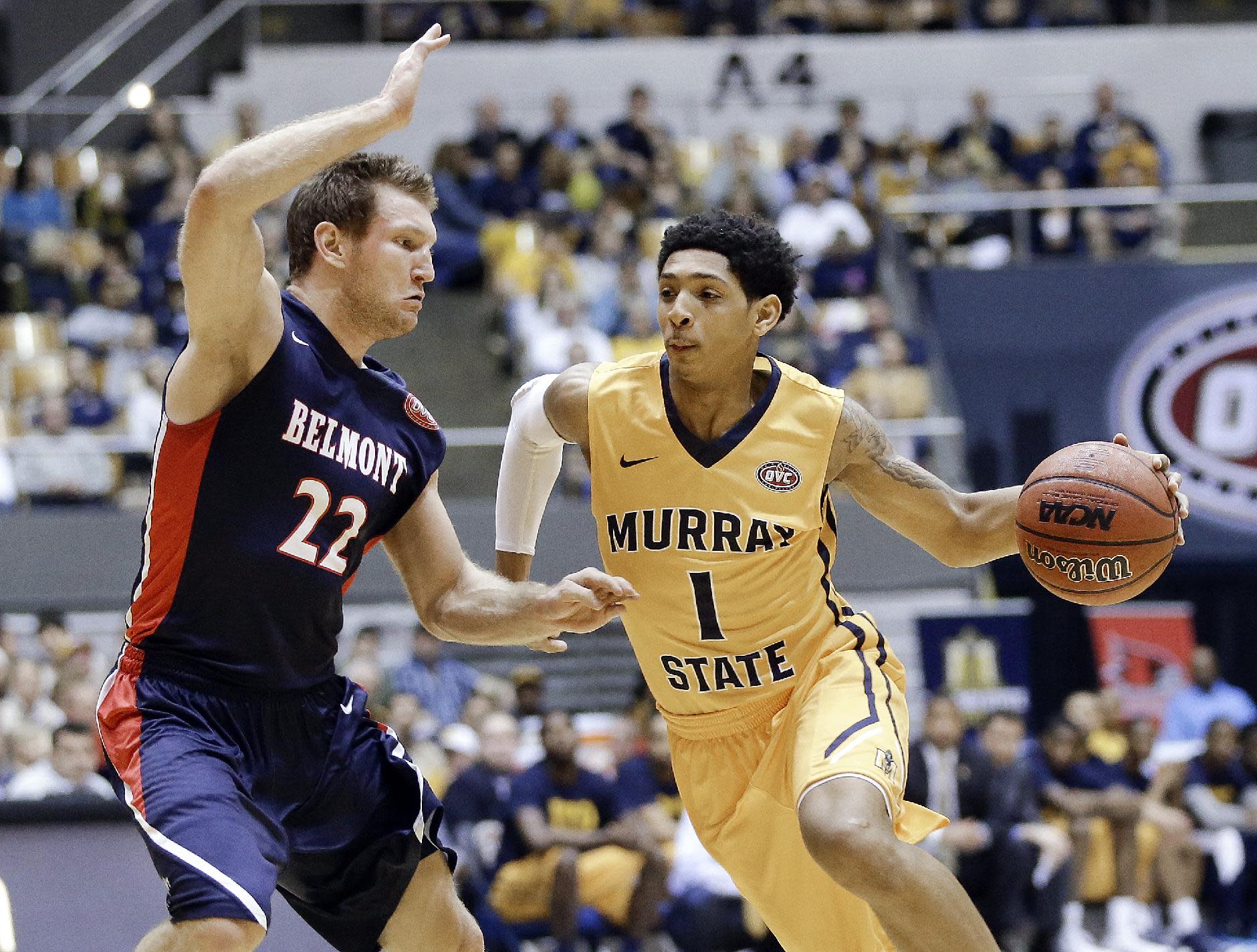
Although Cameron Payne ultimately flamed out in the NBA after being drafted 14th overall by the Oklahoma City Thunder, he was one of the biggest mid-major stars in the sport during his time at Murray State. While Ja Morant is without question the school’s biggest icon, for a while, Payne held that mantle despite only spending two seasons at the university. Payne really rose to prominence during his sophomore campaign (like Morant), where he averaged 20.2 PPG, 6.0 APG, 3.7 RPG, and 1.9 SPG with a 46/38/79 shooting line. It was easy to see why scouts loved Payne’s game, as he was a capable three-level scorer who elevated a bunch of players who weren’t close to being on the NBA radar. During his college tenure, Payne was also an incredibly clutch player as well. While Murray State didn’t reach the tournament during his magical sophomore year campaign that saw the Racers finish the OVC regular season undefeated, his fantastic college career ultimately led to him being a lottery selection. It’s a shame Payne is more well-known in the NBA for dancing with Russell Westbrook than his actual play, as he was an incredibly fun college basketball player who was one of the biggest mid-major stars of the decade.
G-Nate Wolters (South Dakota State)
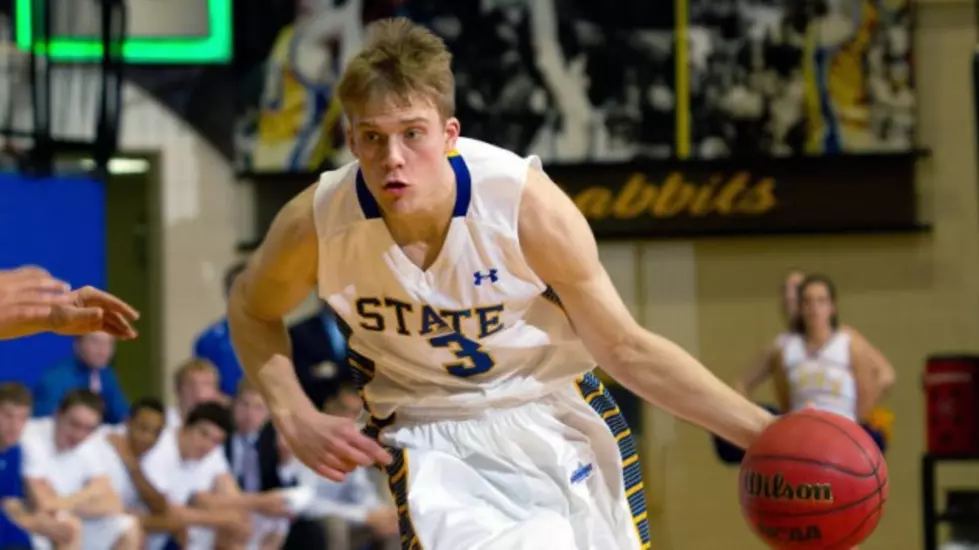
Every single year that the South Dakota State Jackrabbits make the NCAA Tournament, I immediately think back to the Nate Wolters’ days, all the way back to 2010-2013. While Mike Daum is ultimately the best player in South Dakota State history, Wolters is a close second and his elite play for four seasons allowed the Jackrabbits to reach the national scale. South Dakota State easily has a top-five nickname in all of college athletics and thanks to Wolters, the world got to know who the Jackrabbits really were.
To illustrate how elite Wolters was, take a look at these statistics he put up:
| Nate Wolters | PPG | RPG | APG | SPG | FG% | 3-PT% | FT% |
| 2009-10 Season | 10.1 | 3.5 | 2.9 | 1.2 | 38.1% | 35.8% | 83.1% |
| 2010-11 Season | 19.5 | 4.6 | 6.1 | 1.3 | 44.8% | 40.8% | 79.6% |
| 2011-12 Season | 21.2 | 5.1 | 5.9 | 1.7 | 44.8% | 24.1% | 78.3% |
| 2012-13 Season | 22.3 | 5.6 | 5.8 | 1.7 | 48.5% | 37.9% | 81.3% |
While Wolters put up the elite numbers, his mark on the South Dakota State program is truly unmatched. Prior to Wolters arriving, the Jackrabbits never had a single season with a winning record since becoming a Division I program, yet he led the team to three straight seasons of a winning record, including two NCAA Tournament berths (the first two in school history) during his 2011-12 and 2012-13 seasons. Not only that, but it’s evident Wolters was instrumental in building a winning culture for the program. In the past decade, South Dakota State reached the NCAA Tournament five times, the NIT twice, and the CBI once. The Jackrabbits missed postseason play just twice: during the 2009-2010 season and the 2010-11 season. Considering the program never had a winning season before 2010-11, to turn that into nine consecutive postseason appearances, that’s quite the feat.
F-Jared Sullinger (Ohio State)

Jared Sullinger may not be the quintessential forgotten college basketball star, but I think a lot of people are quick to overlook just how good Sullinger was at Ohio State. As a freshman, Sullinger averaged a double-double, recording 17.2 PPG and 10.2 RPG while shooting 54.1% from the floor. Sullinger was Big Ten Rookie of the Year, 2x Consensus All-American, and 2x All-Big Ten during his two seasons at Ohio State, which is quite the resume. As a freshman, Sullinger was key in leading Ohio State to a #1 seed in the NCAA Tournament (and won the Big Ten Tournament), although the Buckeyes flamed out in the Sweet 16 to a dominant Kentucky squad. The following season, Sullinger had a tremendous sophomore campaign and led Ohio State to a Final Four appearance, where they narrowly fell to Kansas.
Sullinger was truthfully one of the more dominant college big men of the past decade and people forget that he was a projected NBA star as well. Sullinger was talked about as a top-10 selection before a back injury was discovered in the pre-draft process, which ultimately tanked his stock. Sullinger’s ability to dominate down low and on the glass, coupled with his budding 3-PT shot, made him an intriguing NBA prospect, although his career never panned out. While Sullinger had his moments, including his 2013-14 NBA season with the Boston Celtics where he averaged 13.3 PPG and 8.1 RPG, but overall, Sullinger was never the star some scouts thought he could be. With that being said, Sullinger was still one of the best college basketball players of the 2010s, and overall, helped reignite the fire behind Ohio State’s basketball program.
G-Russ Smith (Louisville)

Before a wave of NCAA scandals hit the University of Louisville, this was a blueblood program who was an annual threat to cut down the nets. In the early 2010s, Rick Pitino built some fantastic programs headlined by players like Peyton Siva, Preston Knowles, Terrance Williams, and Russ Smith. Smith was one of Louisville’s biggest stars of the past decade and was an integral part in Louisville’s success. During Smith’s four seasons at Louisville, the Cardinals finished in the NCAA Tournament with a Second Round loss, a Final Four loss, a Sweet Sixteen loss, but most importantly, a National Championship during Smith’s junior season. That’s a heck of a collegiate run of success and Smith deserves a ton of credit for his production.
As a freshman, Smith scarcely played for the Cardinals, averaging just 5.6 MPG over 17 contests. However, Smith quickly improved, going from averaging 2.2 PPG as a freshman to 11.5 PPG as a sophomore. Smith then took another leap forward as a junior to become one of the best players in the entire country, averaging 18.7 PPG, 3.3 RPG, 2.9 APG, and 2.1 SPG with a 41/33/80 shooting line to lead the Cardinals to a National Championship. As a senior, Smith’s basic stats were nearly replicated (18.2 PPG, 4.6 APG, 3.3 RPG, 2.0 SPG), but he took major steps forward with his efficiency not only as a shooter, but also as a playmaker. While Smith never found success in the NBA, he did have some iconic professional moments, including holding the G-League record for most points in a game (65) and scoring 81 points for Luoyang in the NBL.
F-Jameel Warney (Stony Brook)

To be honest, I’m not sure why Jameel Warney never got a serious chance to shine in the NBA. Throughout his entire basketball career, Warney has been a double-double machine and in my opinion, has compared favorably to DeJuan Blair, who carved out some solid NBA seasons. Yet, despite his skillset and undisputed production, Warney has never found his mark, even with Jeff Van Gundy saying he should be on a NBA roster.
While Warney has had some success with USA Basketball and in the G-League, he entered the basketball landscape in college, putting up dominant seasons at Stony Brook, a small school in New York. During his four-year career with the Seawolves, Warney started 131 games and averaged 15.8 PPG, 9.4 RPG, and 2.0 BPG. Warney especially dominated as an upperclassman, where as a junior, he averaged 16.4 PPG, 11.7 RPG, and 2.5 BPG only to top that as a senior, when he accumulated 19.8 PPG, 10.8 RPG, and 3.0 BPG. Warney’s most iconic college moment is without a doubt his performance in the American East Championship Game during his senior season, when he dropped 43 points on 18/22 shooting and amassed a double-double in clinching a NCAA Tournament berth for the Seawolves. While Stony Brook ultimately did fall to Kentucky in the opening round, Warney’s utter dominance inside forced Kentucky to send 2-3 defenders towards him at once as his status as a superior interior threat was fully established.
Although he’s another player on this list who never quite flourished in the NBA, Warney’s collegiate impact is something that’s easily forgotten by casual college basketball fans. Yet, for Stony Brook University, Warney might be the finest athlete to ever step foot on campus and his work ethic is legendary around the town. Another mid-major star, Warney’s impact on the Seawolves’ program will be felt for many years to come.
G-Tyler Ennis (Syracuse)

The picture above perfectly encapsulates Tyler Ennis’ lone college basketball season: the guy just had the ability to win. The Syracuse Orange started out the season 25-0 and had an impending blockbuster showdown against Duke approaching on Saturday. While Syracuse did drop a game prior to Duke (and then lost at Cameron which featured Jim Boeheim’s epic suit jacket falling off while arguing a call), Ennis was a key figure in Syracuse’s magical season. Even though he was just a freshman, Ennis was named to the 2013-14 All-ACC team, was on the ACC All-Freshman team, and ACC All-Defense. The Orange didn’t raise a banner during Ennis’ one-and-done season, but this was one of Jim Boeheim’s finest teams of the past decade and Ennis was an integral part in securing that honor.
To tell you the truth, nothing about Ennis’ stat line was particularly flashy, but his impact on the game was unmatched. Ennis only averaged 12.9 PPG, 5.5 APG, 3.4 RPG, and 2.1 SPG while shooting 41.1% from the floor, 35.3% from the 3-PT line, and 76.5% from the foul line. Yet, Ennis’ presence on the court cemented himself as arguably the best floor general in the country; he had an incredible feel for the game and knew how to set his teammates up for success as well. And, of course, his most impactful moment was his half-court game winner against Pitt that is still one of the coldest shots of the decade.
F-Kyle Collinsworth (BYU)

It’s hard to fathom how the NCAA men’s record holder in triple doubles can be a forgotten college basketball star, but I’d bet many of you readers weren’t thinking about Kyle Collinsworth much. Collinsworth, another incredible college player who never found his footing in the NBA, was an absolute stud at BYU, despite taking two seasons off for religious service. Collinsworth never had anything particularly flashy about his game; he’s not an explosive athlete or a good shooter, but he had incredible feel and is a player I compare favorably to Kyle Anderson, aka “Slow-Mo”. Collinsworth, who recorded 12 triple-doubles during his college career and earned the nickname, “Mr. Triple Double”, was the WCC Player of the Year during his senior season. During Collinsworth’s four seasons on the court, BYU made the postseason all four years, including three NCAA Tournament appearances.
Collinsworth was tremendous as a sophomore on, starting 102 games over his final three seasons while averaging at least 13.5 PPG, 4.5 APG, 8.0 RPG, and 1.5 SPG all three seasons. Collinsworth saved his finest campaign for last, where as a senior, he accumulated 15.3 PPG, 8.2 RPG, 7.4 APG, and 2.0 SPG while shooting 46.4% from the floor. Although BYU never reached the Elite Eight or Final Four, Collinsworth became a legend on campus and an icon among future BYU players.
F-Kyle Wiltjer (Gonzaga)
/cdn.vox-cdn.com/uploads/chorus_image/image/60266751/wiltj.0.jpg)
The Gonzaga Bulldogs have been a model mid-major program under Mark Few; in fact, they’ve been such a model program that I think they’ve graduated into a blueblood. Few consistently has the Zags as a final weekend team, but his ability to attract top-tier talent has really increased over the past decade, with Kyle Wiltjer being one of those guys. Wiltjer, who initially played two years at Kentucky, transferred over to Gonzaga for his final two seasons and he did not disappoint. During his two seasons at Gonzaga, Wiltjer averaged 18.6 PPG, 6.3 RPG, and 1.7 APG with a 51/45/83 shooting line. Wiltjer established himself as arguably the best floor-spacing big in college basketball at the time and led the Zags to two dominant seasons.
Wiltjer’s ability to lead Gonzaga was something that helped set a strong tone for Gonzaga’s future, as bigs such as Zach Collins, Killian Tillie, and Filip Petrusev have all followed in Wiltjer’s footsteps with their skillset and development. During Wiltjer’s two seasons, Gonzaga made an Elite Eight and Sweet Sixteen, and the first season after graduating, Gonzaga finally got over the hump to make the NCAA Championship Game. Although Wiltjer wasn’t a part of that magical squad, it’s obvious to say that his development paved the way for some of the current Gonzaga frontcourt players to be able to succeed in Few’s program. That’s a pretty good legacy to leave.
F-Brice Johnson (North Carolina)
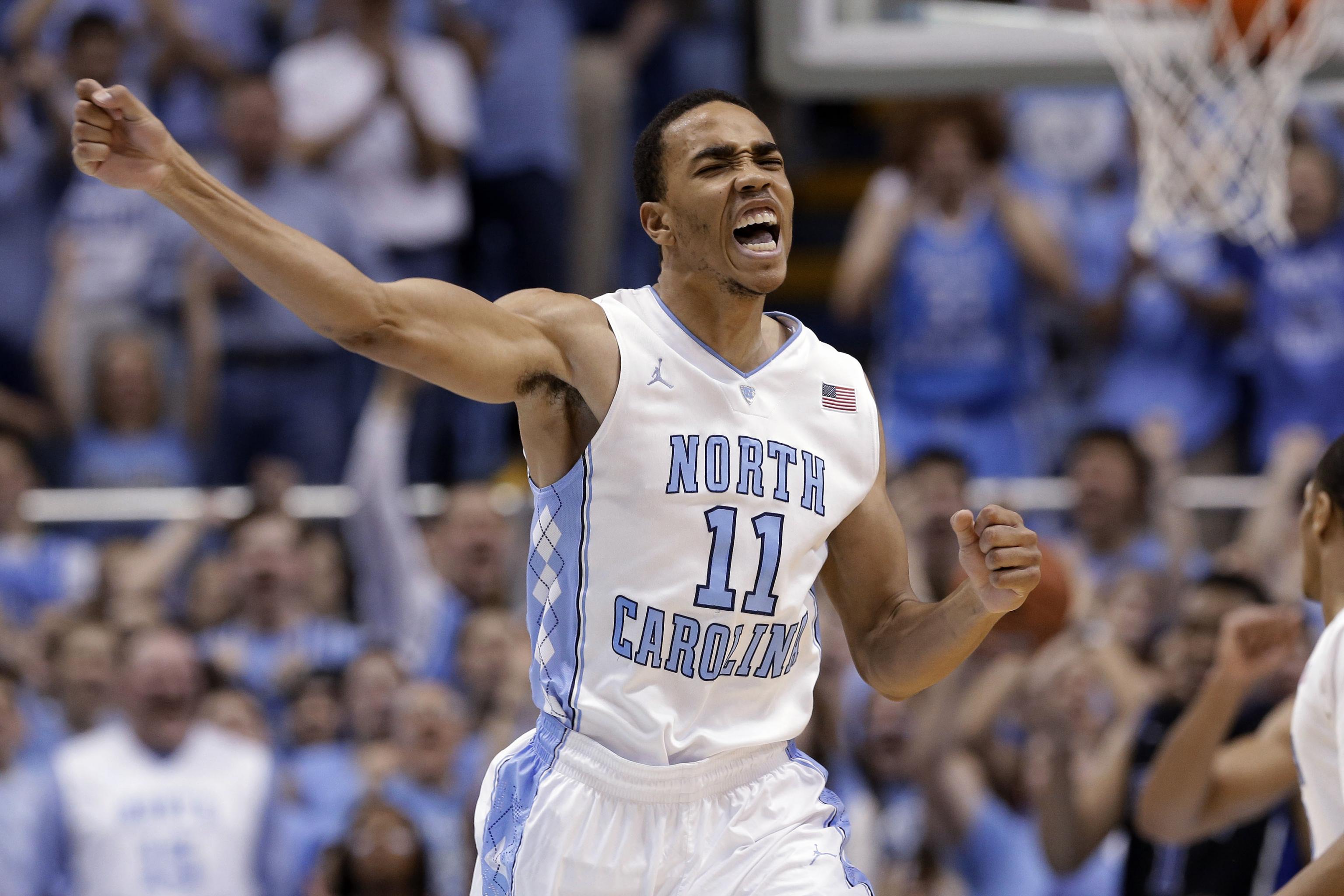
If you’re a college basketball junkie, than Brice Johnson probably doesn’t qualify as a “forgotten player”. Personally, I’d agree with that, but for many casual fans, they’re likely quick to forget just how dominant Johnson was throughout his time at North Carolina, particularly cementing North Carolina’s standing as an elite rebounding team.
During Johnson’s tenure at Chapel Hill, he compiled quite the resume. Johnson was 2x All-ACC, a consensus All-American, 2x All-ACC Tournament, and made the NCAA All-Tournament team. Simply put, the guy was a stud and one of the most underappreciated college basketball players of the past decade. Johnson really blossomed as a junior, breaking out to average 12.9 PPG and 7.8 RPG. However, he took a massive leap forward as a senior, when he averaged 17.0 PPG, 10.4 RPG, 1.5 BPG, and 1.1 SPG while shooting a ridiculous 61.4% from the field. Johnson was part of the North Carolina team that got stunned by Kris Jenkins’ heroics, but his performance during his final two seasons at UNC was simply remarkable. Johnson was a first-round pick in the NBA Draft but barely saw the NBA court during his career, primarily due to an early-career back injury that he never seemed able to shake. Ultimately, I believed Johnson was going to be a solid backup forward with good athleticism and terrific rebounding skills, but his NBA dreams never did pan out. With that being said, Johnson was one of my favorite college basketball players of the past decade as not only did his on-court performance bring pride to North Carolina, but his character and leadership was remarkable and a great presence to have in any locker room.
G-Marshall Henderson (Ole Miss)
/cdn.vox-cdn.com/uploads/chorus_image/image/9923759/20130316_gav_aq9_438.0.jpg)
The final name on our list is Marshall Henderson, and if you’re able to remember any of Henderson’s collegiate career at Ole Miss, then you definitely have some ridiculous moments stored in your memory. I’m not really sure the best way to describe Marshall Henderson, but to sum him up in one word, it’d be “electric”. Henderson was one of those players who was capable of doing anything when he stepped onto the court; that could vary from him scoring 40 points to mocking a student section. This guy was one of the biggest mysteries every night he took the court, but the one thing we can say is he could get buckets. Henderson transferred from Utah and only played two seasons at Ole Miss, although it was two of the program’s better seasons from the past decade. Henderson averaged 19.6 PPG, 2.5 RPG, and 1.9 APG during his two seasons at Ole Miss, where he also built a resume which included SEC Tournament MVP, 2012-13 all SEC, and SEC Rookie of the Year.
Like every player on this list, Henderson never built a solid NBA career, although he did play professionally in Iraq for a few seasons. Henderson’s personality was an exciting scene on the college basketball landscape and his microwave-style scoring made him must-watch TV every time on the court.
 The Chirp